
Remote interior design for GCC projects: what needs to be explicit
What clients and design teams should make explicit when an interior design project in Saudi Arabia, the UAE, Oman or the wider GCC is developed through a remote design workflow.
In brief
- Remote design works best when existing information, responsibilities, approvals and decision authority are explicit from the start.
- A remote studio can lead spatial strategy, design development, visualisation and documentation while local professionals retain responsibilities that require local authority, engineering or site presence.
- Material availability, samples, site verification and consultant interfaces should be treated as project inputs, not left as assumptions.
Remote interior design is not simply conventional design with meetings moved online. Distance changes which information can be observed directly, who can verify site conditions and how responsibilities are divided between the design studio and local project team.
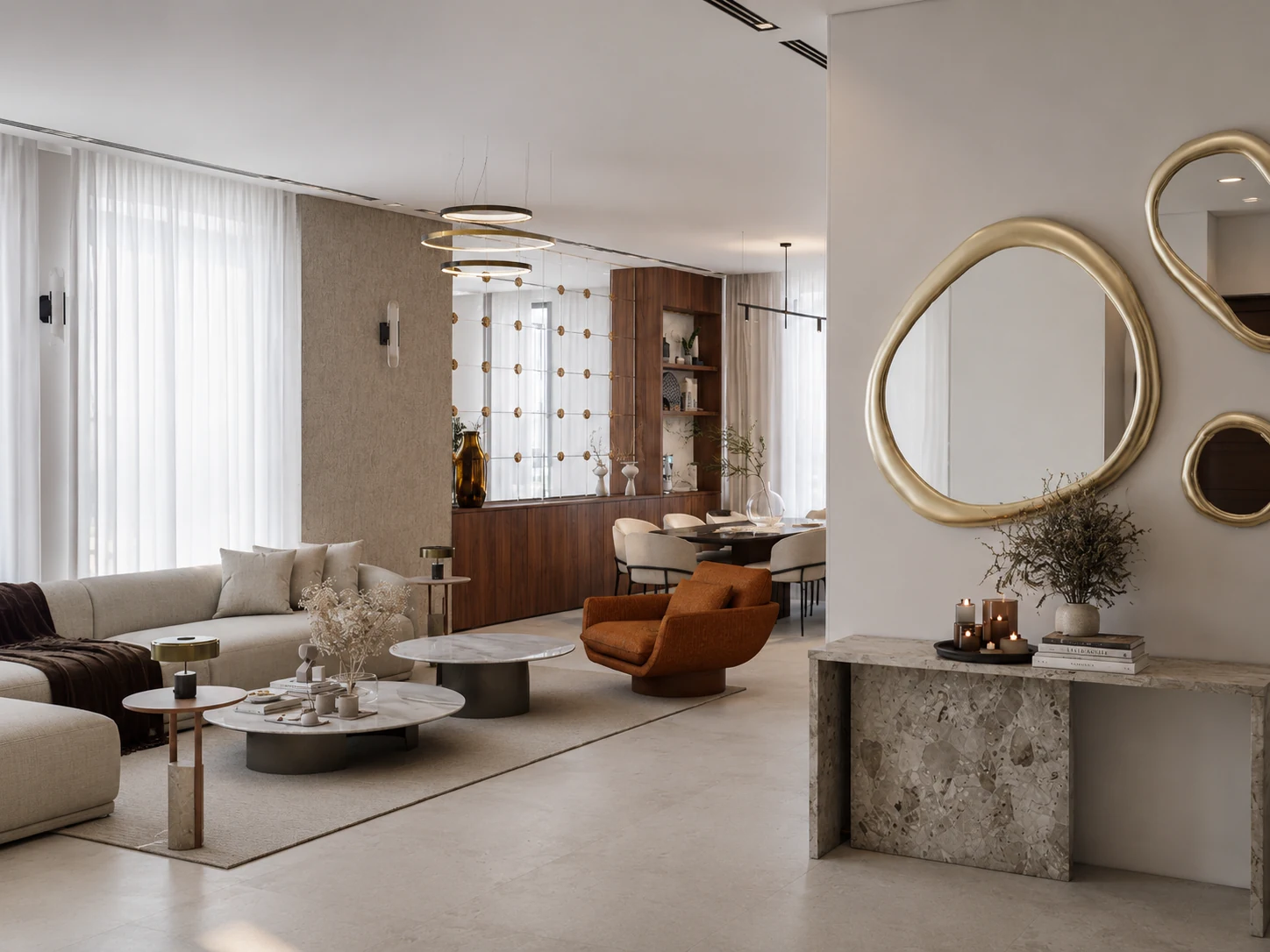
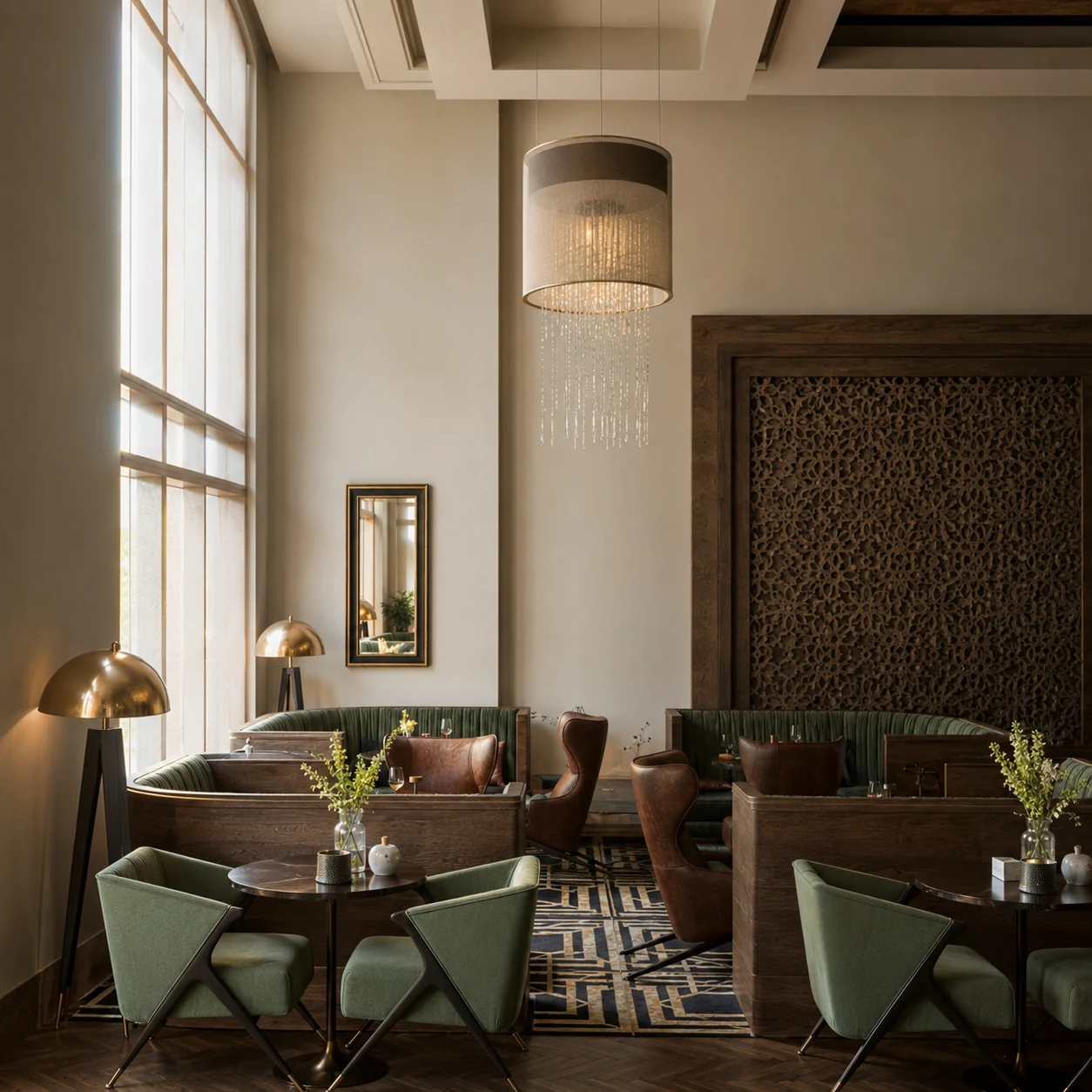
For projects in Saudi Arabia, the UAE, Oman and the wider GCC, the model can work effectively when those conditions are made explicit early. morphd has used remote workflows across residential, workplace and hospitality projects in the region, including Riyadh Private Villa, SIFI Office Headquarters and St. Regis Lounge & Bar in Abu Dhabi.
Start with reliable existing information
Existing architectural drawings, measured surveys, photographs, videos, consultant information and known site constraints should be organised at the beginning. When information is missing, the gap should be identified rather than silently filled with assumptions.
Define who is responsible for what
A remote architecture or interior design studio may lead concept development, planning, material direction, visualisation, FF&E and design documentation. Local architects, engineers, authorities, contractors and suppliers remain responsible where approvals, structural or MEP engineering, code compliance, measured verification, fabrication or site supervision require their appointment and presence.
Agree a decision structure
Remote work is efficient when feedback is consolidated and decisions have a clear owner. Instead of collecting contradictory comments across messages, calls and marked-up PDFs, each review point should end with an agreed direction or an explicit list of unresolved items.
Design around local availability and verification
A material image on a screen is not a physical sample. Where finish, colour, texture or fabrication quality is important, samples and supplier information should be reviewed locally before procurement. Imported furniture and fixtures also introduce lead-time, dimensional, compatibility and substitution risks.
Use visualisation as a shared review environment
High-quality visualisation gives clients and project teams a common reference for proportion, atmosphere and material relationships. But images still need to remain connected to drawings and schedules. If a material, light fixture or joinery detail changes, the project information should change with it.
Plan verification before irreversible decisions
Dimensions that affect custom joinery, stone, glazing, fitted furniture or other site-dependent elements should be verified by the responsible local party before fabrication. Remote design can define intent and coordination, but should never turn unverified information into a measured fact.
Remote should describe location, not reduced responsibility
The value of a remote model is that design expertise can be organised independently from geographic proximity while local responsibilities remain with the people best placed to perform them. Precision in those interfaces is what makes the model robust.