
Concept design vs design development vs documentation: what changes at each stage
A practical explanation of the difference between concept design, design development and documentation, and why each stage answers a different kind of project question.
In brief
- Concept design compares directions and establishes the spatial and visual logic of the project.
- Design development resolves the selected direction across dimensions, materials, furniture, lighting and project-specific interfaces.
- Documentation communicates the agreed decisions clearly enough for pricing, coordination, procurement or execution according to the defined scope.
Clients often receive proposals that use “concept,” “design development” and “documentation” as if the words were self-explanatory. They are not. The stages overlap, and different studios define deliverables differently, but each stage should answer a different type of question.
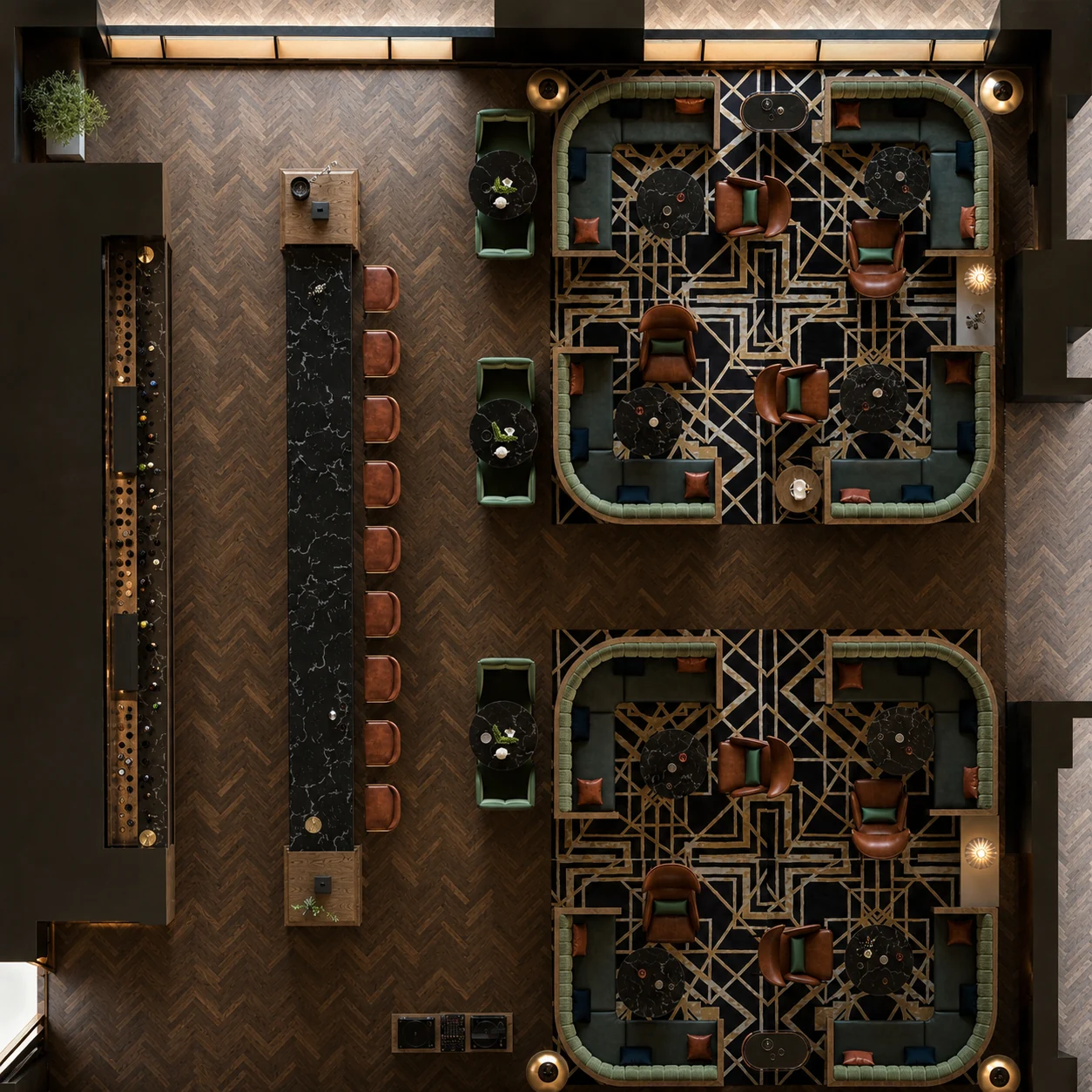
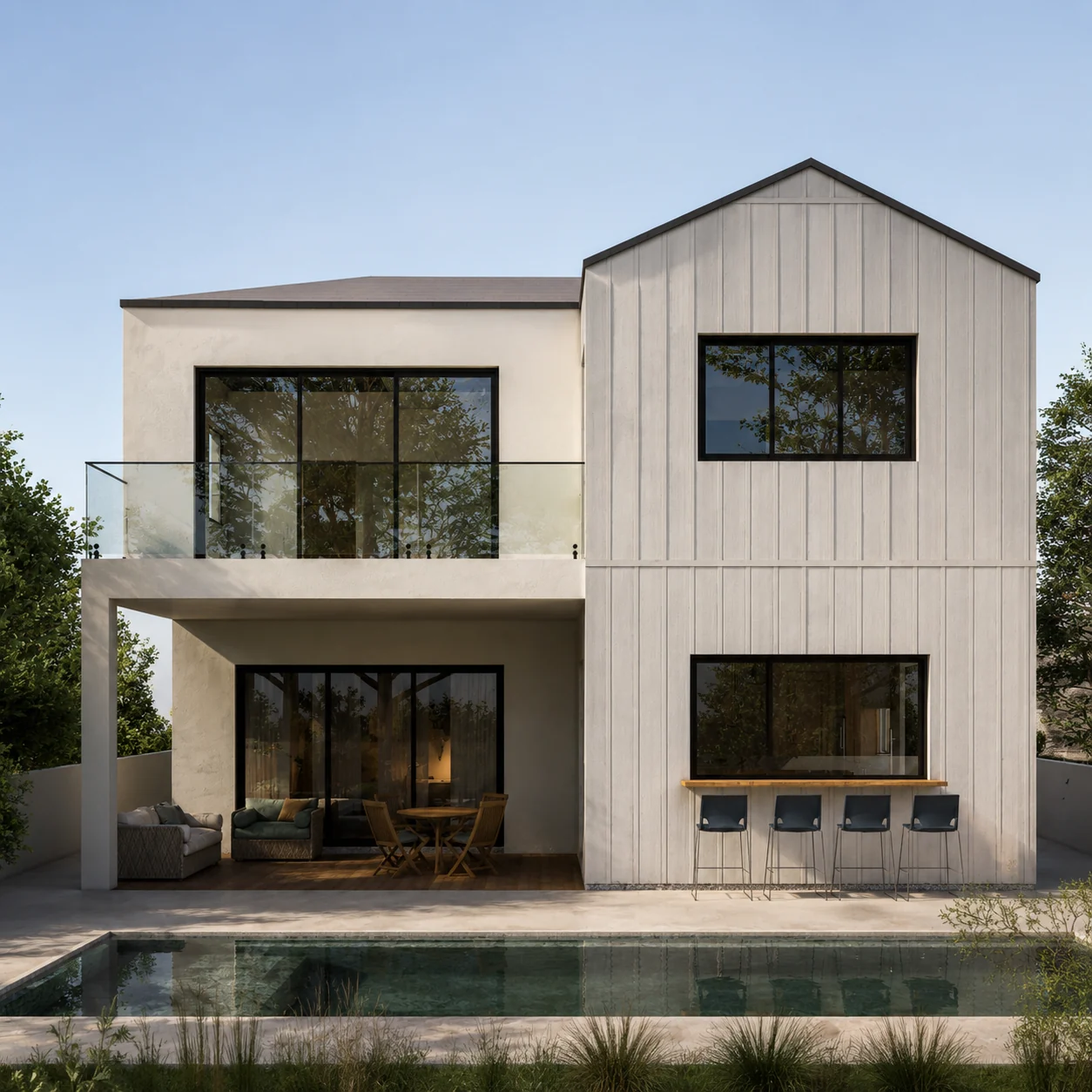
The distinction becomes clearer when viewed across projects. A residential exterior and interior direction at 848 Radcliffe begins by establishing a coherent language. A workplace such as SIFI then requires detailed coordination between planning, furniture, lighting and rooms. A hospitality project such as St. Regis Lounge & Bar may retain the architectural shell while developing layout, furniture and FF&E in greater depth.
Concept design asks: which direction should the project take?
Concept design organises the brief, tests meaningful alternatives and establishes the project logic. Typical outputs may include layouts, diagrams, precedent or material direction, key visuals and an explanation of the differences between options.
The goal is not to resolve every detail. It is to make the main spatial and design choices explicit enough that one direction can be selected.
Design development asks: how does the selected direction actually work?
Once a direction is chosen, dimensions, materials, furniture, lighting, joinery, transitions and interfaces need more precise resolution. Design development is where attractive ideas either become coherent systems or begin to contradict one another.
This stage typically includes more detailed plans, elevations, material decisions, refined visualisation, FF&E selection and coordination with available consultant information.
Documentation asks: how is the agreed design communicated?
Documentation translates resolved decisions into information that other parties can use. Depending on scope, that may include furniture layouts, finish information, reflected ceiling and lighting intent, interior elevations, joinery drawings, schedules and details.
Documentation is not automatically construction documentation in the statutory or engineering sense. Responsibilities should be defined clearly, particularly for structural, MEP, code, fabrication and local professional duties.
Why skipping stages creates expensive ambiguity
Moving directly from a moodboard to detailed drawings can freeze a weak layout. Producing photorealistic visuals before furniture and dimensions are stable can create images that later conflict with project information. Detailing joinery before services are understood can generate rework.
Stages should end with decisions, not just files
A useful stage has an exit condition. Concept ends with a selected direction. Development ends with major spatial, material and furniture decisions resolved. Documentation ends with the agreed scope communicated consistently enough for the next responsible party.
The names matter less than the logic: compare before committing, resolve before documenting, and make the interfaces between stages visible.