
Residential design across exterior, interior, materials and FF&E
How a residential design direction can stay coherent across exterior expression, interior planning, material selection, furniture and visualisation without making every space identical.
In brief
- A coherent residence does not require the same material everywhere. It requires a consistent hierarchy of proportion, tone, texture and detail.
- Exterior decisions and interior decisions should share a design logic when the scope includes both, especially at thresholds, openings and material transitions.
- Furniture and visualisation are useful design tools when they test scale and atmosphere rather than being added after the architecture is considered finished.
Residential projects often divide into separate conversations: architecture, exterior finishes, interiors, furniture and rendering. That can be administratively convenient, but design quality suffers when those conversations stop informing one another.
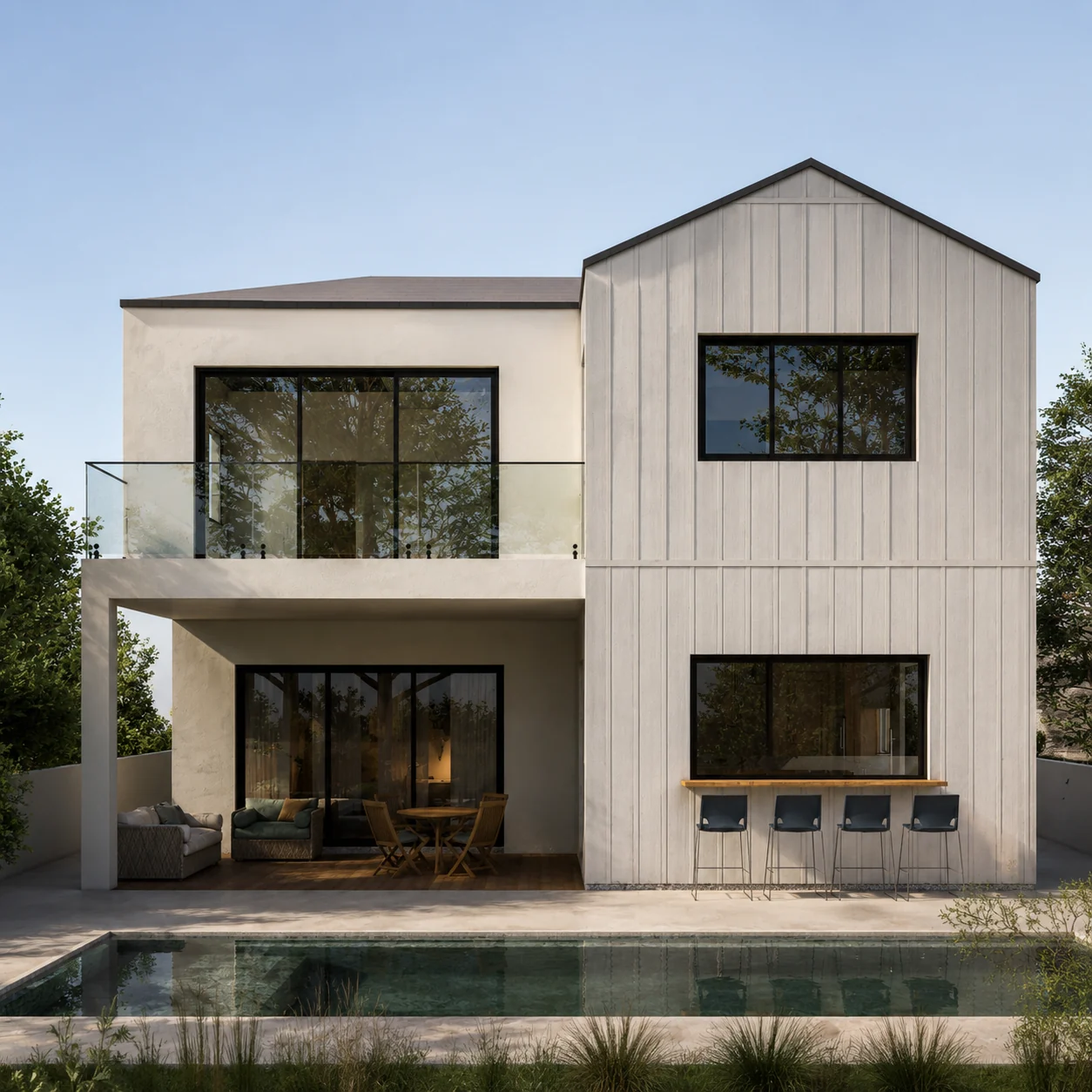
848 Radcliffe in Pacific Palisades is the clearest example in the current morphd portfolio because the scope spans exterior design, interior design, material selection, furniture/FF&E and visualisation. BCR Private Villa and Riyadh Private Villa show the same coordination question through different scopes and climates.
Build one hierarchy, not one repeated palette
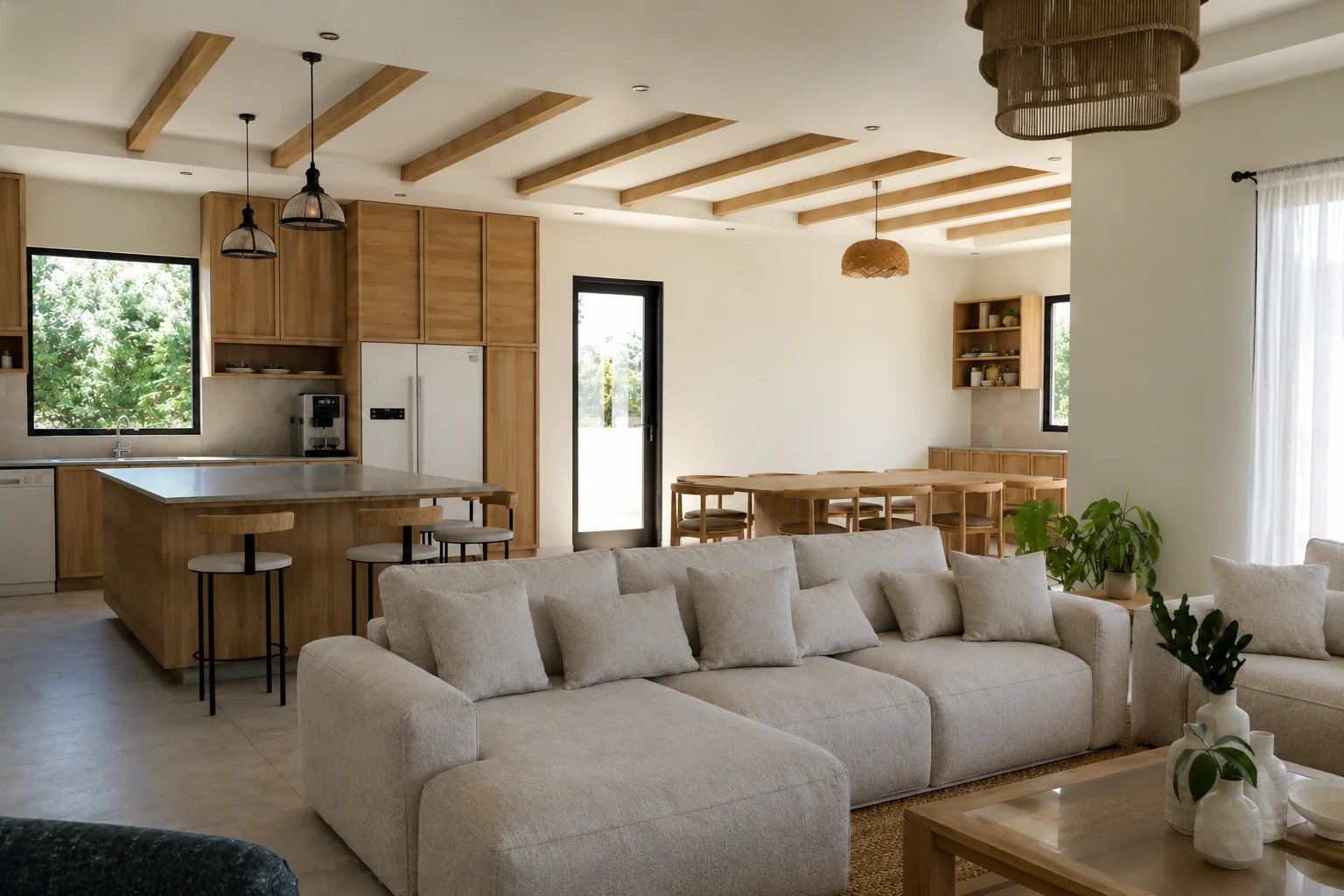
Coherence is not the same as repetition. A residence can move from exterior stone and timber to quieter interior surfaces without losing identity if scale, colour temperature, edge conditions and detail language remain related.
The coastal direction at 848 Radcliffe uses light surfaces, warm timber, dark accents and tactile materials as a family of relationships rather than as a themed checklist.
Let planning carry the concept
Material coherence cannot rescue a plan that does not work. Circulation, furniture clearances, storage and room relationships still form the base of the design. At Riyadh Private Villa, the challenge is to make a compact 200 m² footprint feel composed rather than compressed; integrated storage and architectural elements do part of that work.
Use budget to focus detail
BCR Private Villa began from an existing architectural proposal and a controlled budget. Rather than relying on expensive gestures, the design focuses resources on a restrained palette, repeatable details, lighting and selected custom joinery. Coherence can come from discipline as much as from material cost.
Coordinate exterior and interior at thresholds
Doors, windows, terraces, entrance sequences and views are where exterior and interior decisions become one spatial problem. Material changes at these points should feel intentional, and furniture should respect the orientation and visual structure established by the architecture.
Use visualisation to compare relationships
Visualisation can test whether a façade material is too dominant, whether an interior finish competes with furniture, or whether the atmosphere becomes too literal. Used this way, rendering is part of design development rather than a final marketing layer.
The objective is not stylistic sameness. It is a residence where different rooms and scales feel like decisions made by the same project logic.