
Short-term rental interior design: from guest experience to sourcing and implementation
How short-term rental interiors can connect guest experience, durability, space planning, sourcing and implementation instead of stopping at attractive renderings.
In brief
- Short-term rental design should optimise repeatable guest use, maintenance and spatial clarity, not only the first photograph.
- Furniture, finishes and lighting need realistic sourcing and dimensional coordination because substitutions are common during implementation.
- A completed project and an in-progress project reveal different parts of the same workflow: design intent has to survive procurement and execution.
Short-term rental interiors sit between residential design and hospitality operations. They need to feel distinctive enough to be memorable, but they are also used repeatedly by people who do not know the space, its storage logic or its delicate details.
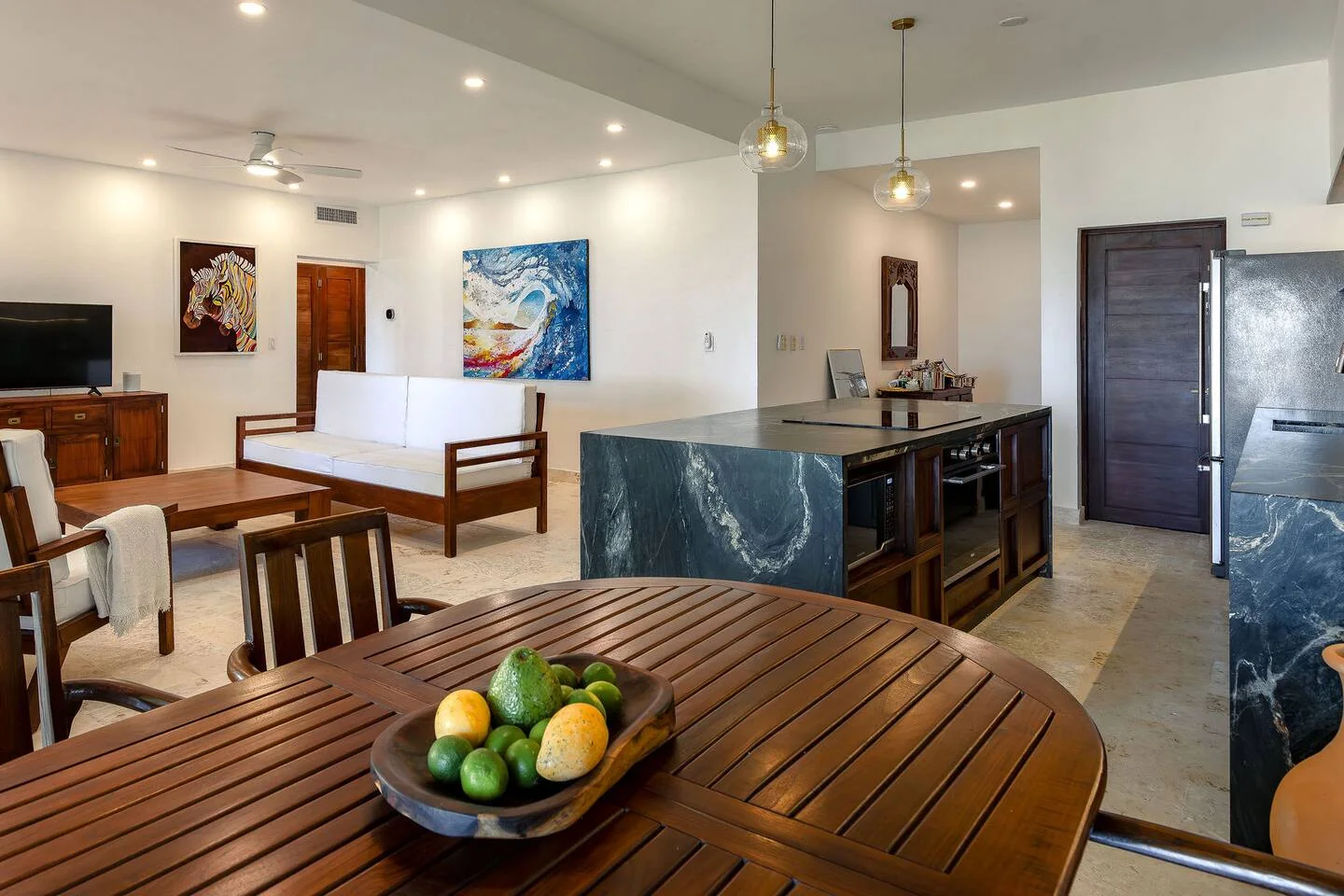
Cabarete Airbnb Apartment in the Dominican Republic is a completed 125 m² renovation. Ipoh Airbnb in Malaysia is currently in progress with interior design, sourcing and coordination moving together. Taken together, the two projects are more useful than a location-specific lesson because they expose both the design and implementation sides of the same problem.
Design for a guest who has never seen the plan
Circulation, storage, switches, luggage placement, dining and kitchen use should be understandable without explanation. Guest experience is partly atmosphere, but it is also the absence of small spatial frictions.
Make the main spaces photograph well because they work well
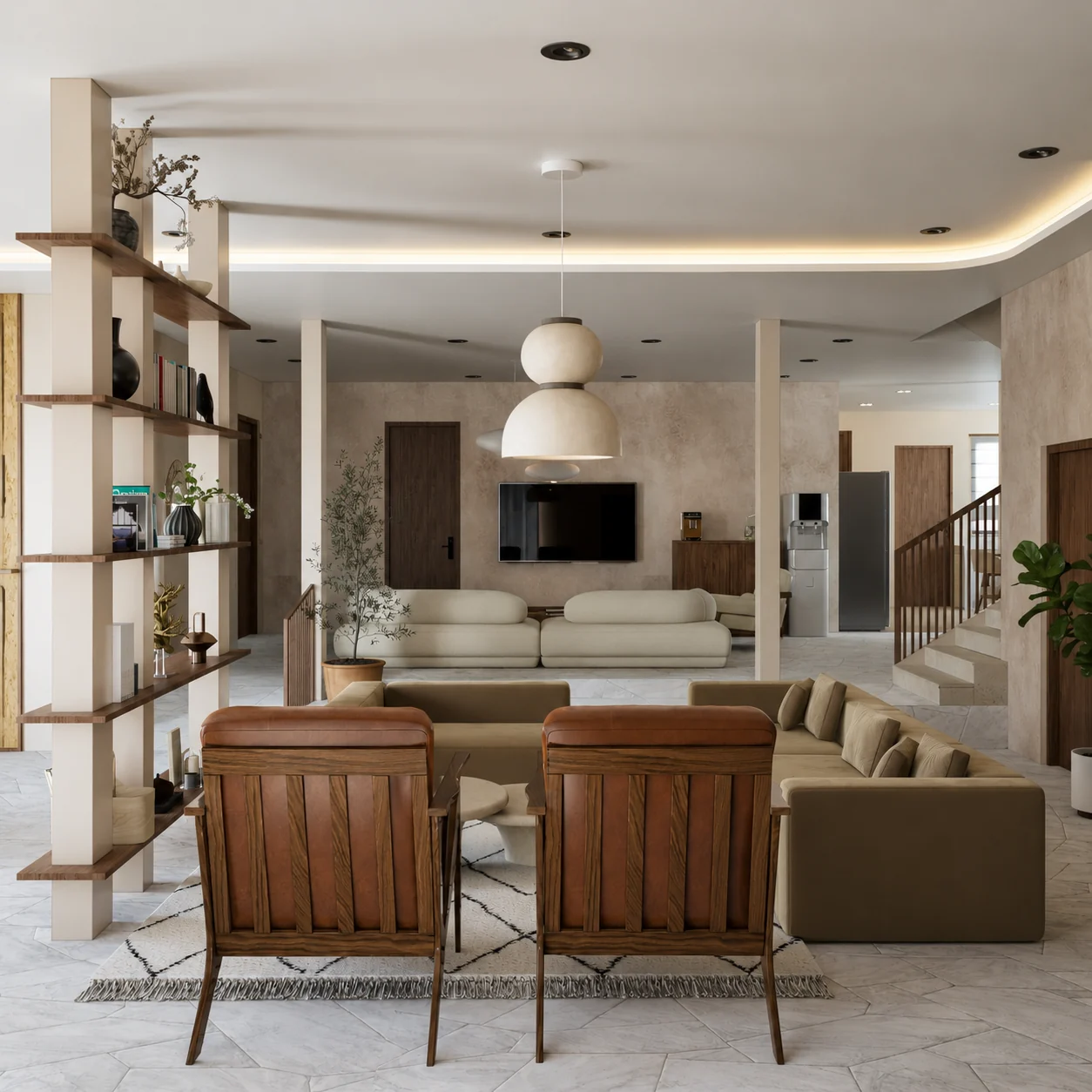
Living, dining and kitchen areas often carry the visual identity of a short-term rental. The strongest images usually come from clear spatial relationships, proportion and light rather than from adding decorative objects until the room appears full.
Choose materials for maintenance as well as mood
A finish that looks convincing in a sample or render still needs to tolerate cleaning, luggage, repeated use and realistic local maintenance. Durability does not require making the interior visually generic, but it should influence where delicate materials are used.
Keep sourcing connected to the design
Furniture and fixture availability changes. Lead times move. A product may be unavailable in the required finish or size. The design needs enough hierarchy that substitutions can be evaluated against the overall direction instead of turning into unrelated one-off decisions.
Coordinate dimensions before procurement
Sofas, dining tables, beds, rugs, pendants and millwork are not independent purchases. Their dimensions affect circulation, sightlines and one another. This is particularly important when sourcing is distributed across local and online suppliers.
Use completed work to improve the next project
Cabarete shows the value of coordinated millwork, lighting, electrical layouts and bathroom information in a completed short-stay renovation. Ipoh adds a different lesson: when sourcing and coordination remain active during implementation, the project is better equipped to absorb substitutions without losing its design identity.
The commercially useful category is therefore not “Airbnb design in Malaysia.” It is short-term rental interior design that can survive real procurement and repeated guest use, with project locations serving as evidence rather than the subject itself.